Creating the ultimate romance in your backyard with a popular gazebo. It is not only a shelter from wind and rain, but also a healing corner for family gatherings and alone time, and even a finishing touch that enhances the style of your backyard. However, facing the wide variety of gazebos on the market, many people will fall into the dilemma of choice: which type of gazebo is suitable for their home? What are the differences between different types of gazebos? Today, we will detail the common types of gazebos, covering materials, features and applicable scenarios, to help you easily choose the perfect gazebo for your backyard~
In fact, there are many ways to classify gazebos, which can be divided by roof material, structural style and degree of enclosure. The 5 most common and close to daily needs are as follows. Each has its own advantages and applicable scenarios, come and find your match!
1. What is a Hardtop Gazebo
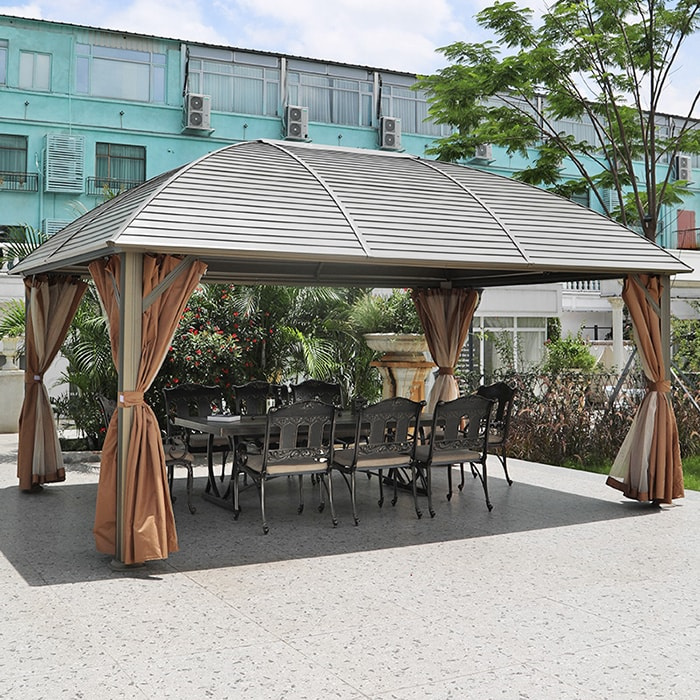
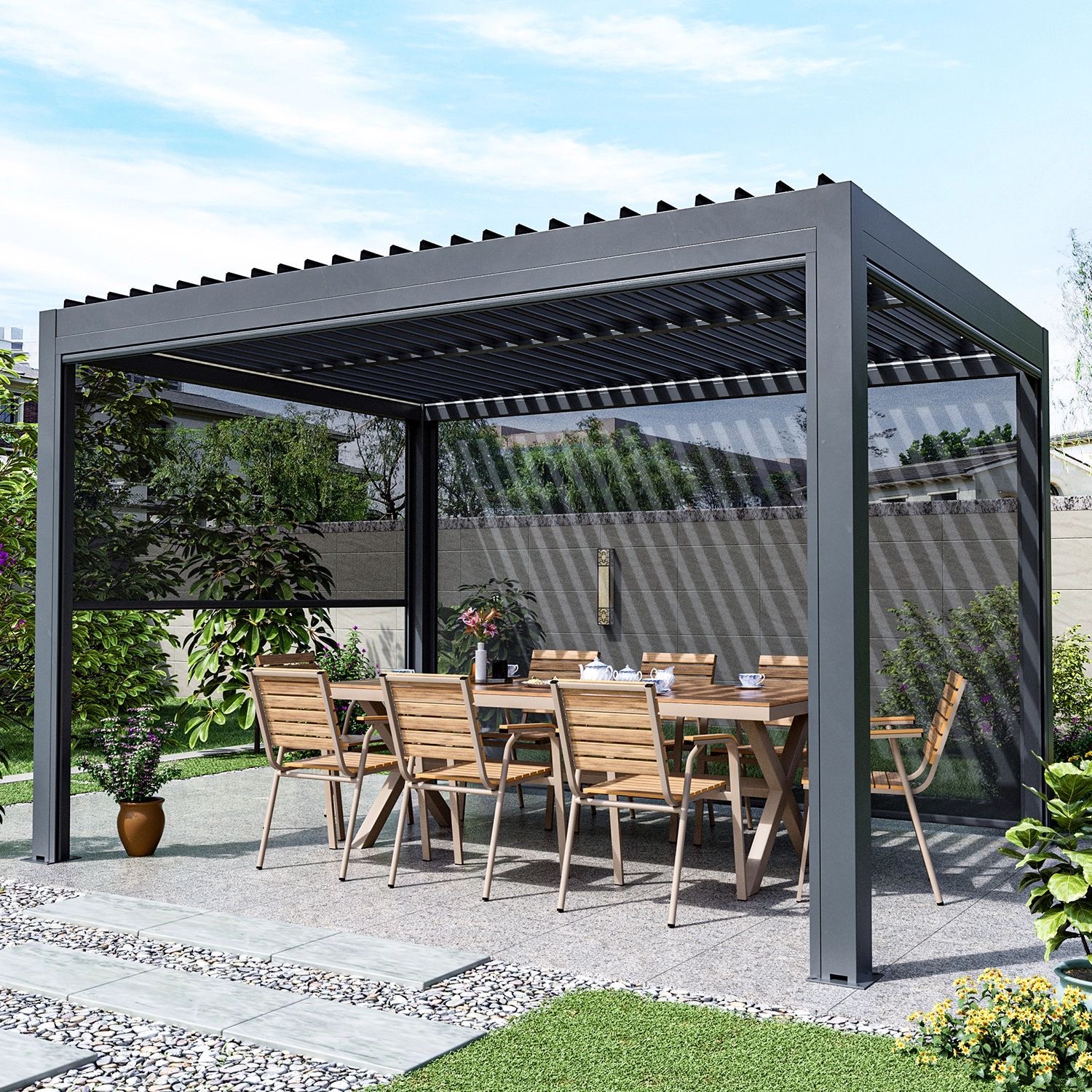
Hardtop gazebo is currently one of the most popular types in backyard decoration. As the name suggests, its core feature is “hard” — the roof is made of durable 0.4mm galvanized sheets, and the columns and beams are made of aluminum alloy. It is the first choice for those who pursue worry-free and long-term use.
Features
- Durable Roof: Made of hard materials such as metal, it can easily resist severe weather such as strong winds, heavy rains and snowfall, and even effectively block ultraviolet rays. It provides shade in summer and shelter from rain in rainy days, and can be used normally throughout the year.
- Open Design: Most have no walls, only retaining the top shelter. It has a wide view and excellent ventilation, which can maximize the retention of the natural outdoor atmosphere, suitable for people who like to get close to nature.
- Optional curtains and enclosures are available to keep mosquitoes and insects out, creating a private space.
Materials
Frame:steel or aluminum.
Roof :galvanized sheets/Aluminum Sheet/Polycarbonate
Advantage of Hardtop Gazebo
Exceptional Weather Resistance: Hardtop gazebos are engineered to stand up to all kinds of weather conditions. They can easily withstand strong winds, heavy downpours, and snow accumulation, while also offering superior protection against harmful UV rays and sun-related damage.
Minimal Maintenance: Keeping a hardtop gazebo in good condition requires little effort. All you need to do is occasionally clean the roof and frame to keep it looking its best. – Sleek and Contemporary Look: With their modern, clean design, hardtop gazebos effortlessly complement any outdoor decor or setup, adding a touch of elegance to your backyard.
Potential Drawbacks of Hardtop Gazebo
Possible Heat Retention: One thing to note is that the solid roof can trap heat on hot days, leading to a slightly stuffy interior. To improve airflow, consider installing fans or adding a few vents to keep the space cool and breezy.
Higher Initial Cost: Thanks to their durable materials and sturdy construction, metal hardtop gazebos are generally more expensive than soft-top alternatives. That said, their long lifespan, low maintenance needs, and lasting value make this initial investment well worth it.
2. Enclosed Gazebo
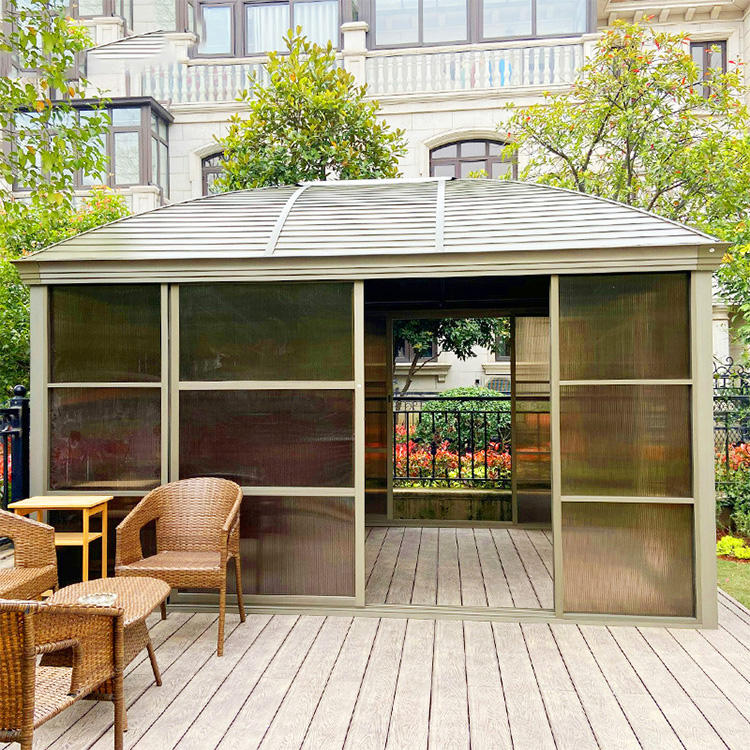
If the hardtop gazebo is an “open healing corner”, then the enclosed gazebo is an “immersive private space”. It is equivalent to building a small independent area in the backyard, equipped with walls and windows (or screens), balancing protection and privacy. It is the best choice for those who like quiet and pursue multi-functional use.
Core Features
- Fully Enclosed/Semi-Enclosed Design: With sliding pc walls, you can choose fully enclosed or semi-enclosed screens according to your needs. It can not only isolate mosquitoes and dust, but also ensure privacy, so you don’t have to worry about being disturbed by neighbors.
- Versatile Functions: It can be flexibly transformed into a leisure area, tea room, small office area, children’s play area, and even a temporary guest room. It can be used throughout the year without being affected by the weather.
- Good Warmth: The enclosed design can effectively block cold winds, so you can enjoy the outdoor time in winter. With heating equipment, the comfort is full. It can also be equipped with air conditioning for use in summer.
Materials
Frame: metal .steel,aluminum or solid wood.
Wall materials: screens, polycarbonateetc.
Roof :galvanized sheets/Aluminum Sheet/Polycarbonate
Advantage of Enclosed Gazebo
Strong privacy, mosquito and dirt proof, versatile functions, and usable all year round.
Potential Drawbacks of Enclosed Gazebo
The lighting and ventilation are slightly inferior to those of open gazebos, which can be improved by installing skylights and large windows.
The cost is higher than that of hardtop gazebos, with a slightly higher initial investment, but the practicality and comfort are more prominent.
3. Soft-Top Gazebo
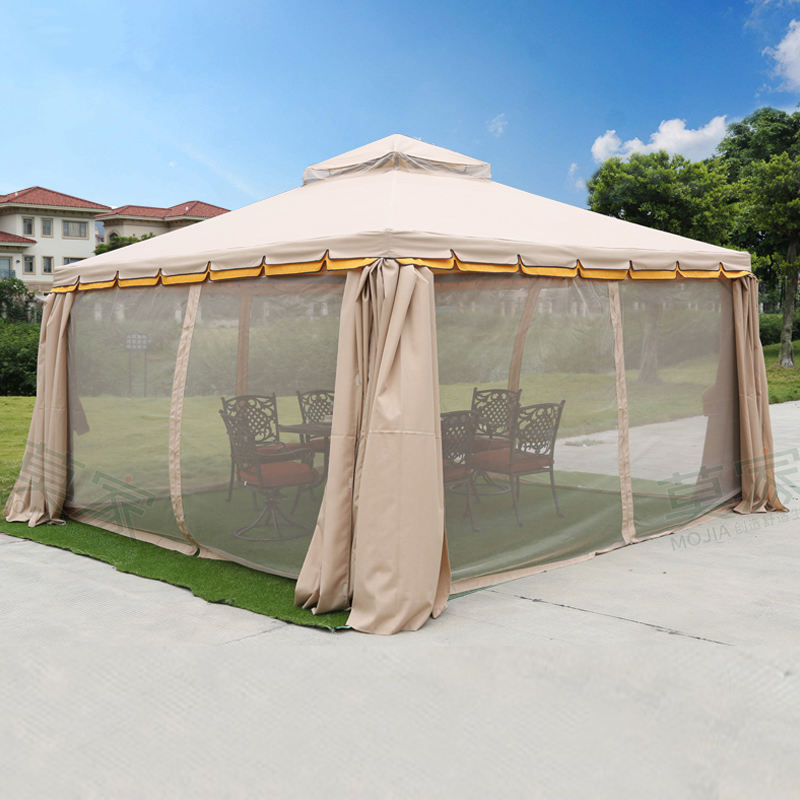
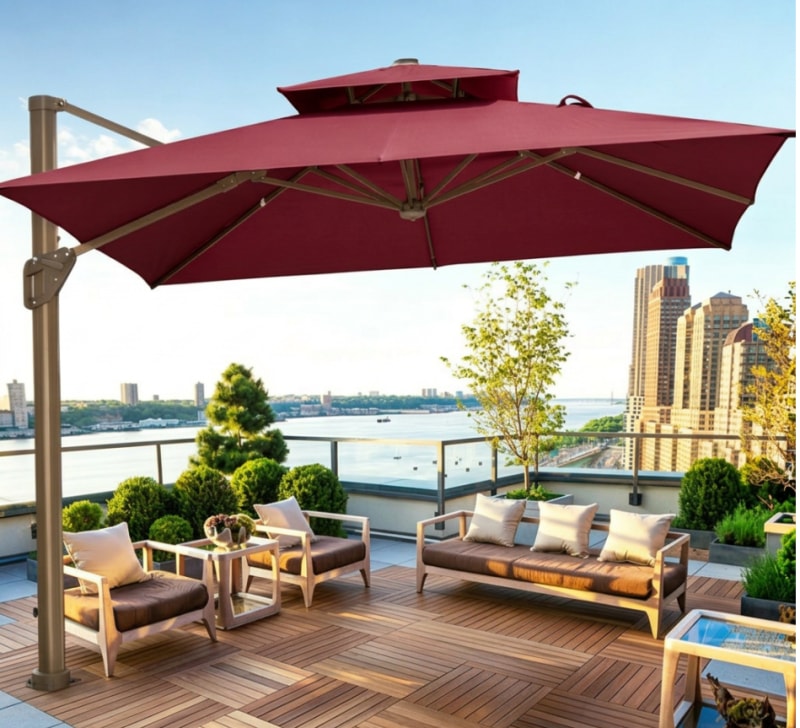
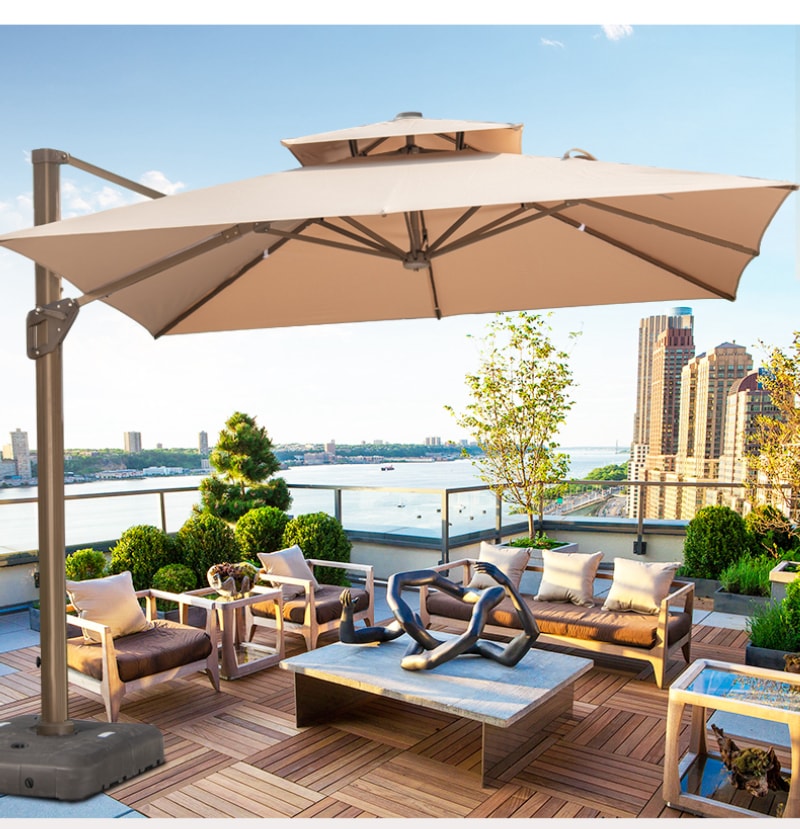
Soft-top gazebo is a “lightweight” choice. The roof is made of flexible materials such as canvas and Oxford cloth, and the frame is mostly lightweight aluminum alloy or stainless steel. Its biggest feature is flexibility and portability, suitable for people with limited budget, temporary use or who like to adjust the backyard layout frequently.
Core Features
- Lightweight and Easy to Store: The frame and roof is detachable. Installation and storage are very simple. When not in use, it can be easily folded up without occupying backyard space, and even can be carried around (such as for camping and outdoor parties).
- Affordable Price: Compared with hardtop and enclosed gazebos, soft-top gazebos have a lower cost and high cost performance, suitable for temporary use or families with limited budget.
- Diverse Styles: The roof cloth has a variety of colors and patterns, which can be selected according to the backyard style, and can be adapted to minimalist, pastoral and casual styles.
Frame: aluminum alloy and stainless steel, which is lightweight and not easy to rust.
Roof cloth: Oxford cloth and canvas, which has been waterproof and sun-proof treated, and can meet the basic needs of shade and shelter from rain.
Advantages of Soft-top Gazebo
Lightweight and easy to store, affordable price, diverse styles.
Potential Drawbacks of Soft-top Gazebo
Poor weather resistance, cannot resist strong winds, heavy rains and snowfall, and has a short service life (usually 2-3 years). The roof cloth needs to be replaced regularly. It is suitable for temporary use and not for long-term outdoor placement.
4. Wooden Gazebo
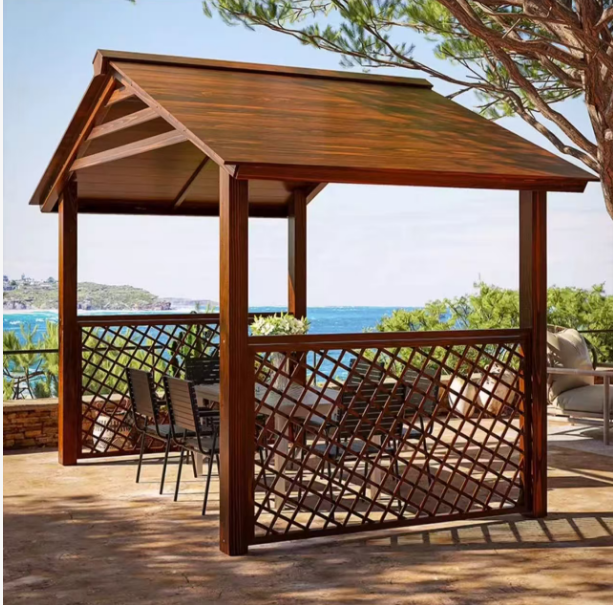
Wooden gazebo is a representative of traditional gazebos, with a simple and elegant temperament. It is mainly made of natural wood and integrates into nature. It is an excellent match for Chinese-style, pastoral-style and Japanese-style backyards, which can instantly enhance the cultural heritage and atmosphere of the backyard.
Core Features
- Full of Natural Texture: The natural wood has clear texture and warm color, which can perfectly integrate with the green plants and landscapes in the backyard, creating a Chinese-style artistic conception of “a scene at every step” with full atmosphere.
- Diverse Styles: It can be divided into open and semi-enclosed types. Common ones are four-corner pavilions, six-corner pavilions and eight-corner pavilions. The shape is exquisite, with a classic beauty, suitable for people who pursue the style of the backyard.
- Good Air Permeability: The wood itself has a certain air permeability. Even the semi-enclosed style can maintain good ventilation and will not be stuffy in summer.
Materials
It is mainly made of weather-resistant wood such as anti-corrosion wood, pine and fir. Among them, anti-corrosion wood is the most popular. After special anti-corrosion treatment, it can effectively resist moth-eaten, moisture and rot, and extend the service life.
Advantages of Wooden Gazebo
High appearance, strong atmosphere, good air permeability and unique style.
Potential Drawbacks of Wooden Gazebo
High maintenance cost, need to regularly brush anti-corrosion paint and wax to prevent wood rot and cracking. The price is moderate, and the weather resistance is not as good as that of hardtop gazebos. It is not suitable for long-term use in humid and rainy environments.
5. Gazebo with Seats
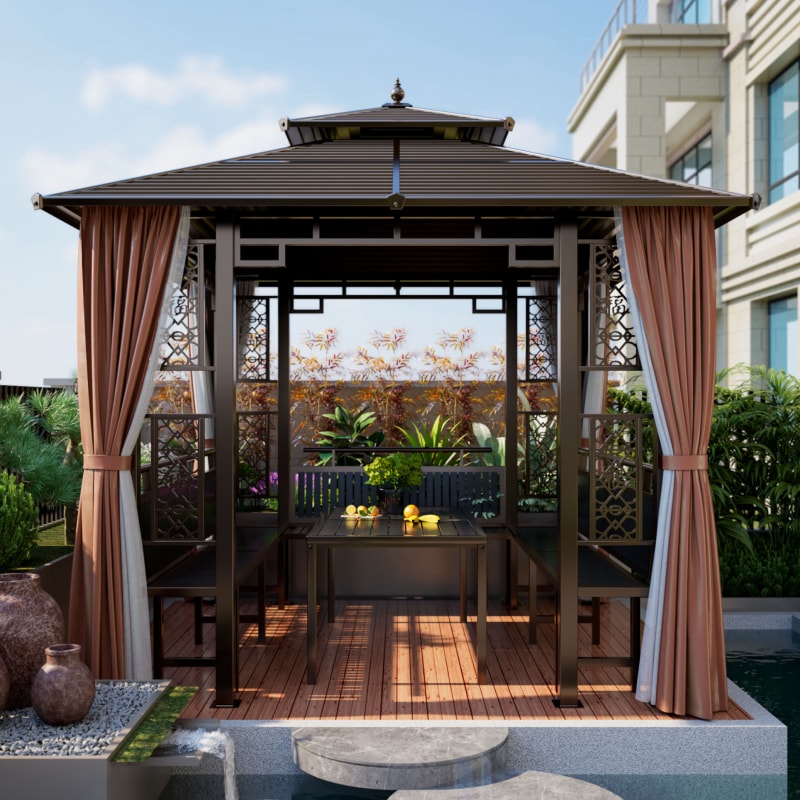
Gazebo with seats is a multi-functional style focusing on “worry-free and convenient”. It integrates the main body of the gazebo with the seat design, no need to match additional outdoor furniture, and can be used out of the box. It can not only save backyard space, but also meet the immediate leisure needs. It is an ideal choice for small backyards and lazy families.
Core Features
- Integrated Design: The gazebo frame is seamlessly connected with the seats. The seats are mostly arranged around the inner side or one side of the gazebo, saving backyard space. There is no need to buy and place additional outdoor seats, which is worry-free and labor-saving.
- Convenient and Practical: With a built-in rest area, it can be used at any time for family gatherings, chatting with friends or alone time, without additional arrangement, suitable for fast-paced life.
- Flexible Styles: It can be built with different materials such as hardtop, soft-top and wood, including modern simple styles and classical elegant styles, which can adapt to various backyard styles and balance practicality and appearance.
Materials
Frame material: adopts steel or aluminum frame
Seat surface:Polywood,
Roof:metal /soft Oxford cloth/ polycarbonat
Advantages of Gazebo with Seats
The integrated design saves space, is worry-free and convenient, no need to match additional furniture, and the style is flexible to adapt to various styles.
Potential Drawbacks of Gazebo with Seats
The seats are fixed and cannot be moved, with slightly poor flexibility. The comfort of some seats is not as good as that of independent outdoor seats, which can be improved by matching cushions. Some enclosed gazebos with seats will slightly affect the internal activity space.
Shopping Tips: How to Choose the Right Gazebo for You?
After reading the above 5 common types of gazebos, I believe you have a general direction. Finally, I will give you some practical tips to help you avoid misunderstandings in choice:
- Look at Needs: If you pursue durability, low maintenance and ventilation, choose a hardtop gazebo; if you pursue privacy, versatility and year-round use, choose an enclosed gazebo; if you have a limited budget and need temporary use, choose a soft-top gazebo; if you like classical style and Chinese-style atmosphere, choose a wooden gazebo; if you pursue worry-free convenience and space saving, choose a gazebo with seats.
- Look at Climate: In areas with more rain, strong winds and snowfall, prioritize hardtop or enclosed gazebos; in areas with many mosquitoes, prioritize enclosed screen models; in areas with mild climate and sufficient sunlight, hardtop, soft-top and wooden gazebos can all be chosen.
- Look at Budget: Soft-top gazebo < Hardtop gazebo < Wooden gazebo < Enclosed gazebo. Choose according to your own budget, and at the same time take into account the long-term use cost performance (for example, although the hardtop gazebo is slightly expensive in the early stage, it is simple to maintain and has a long service life).
- Look at Style: If the backyard is modern style, choose hardtop or soft-top gazebo; if it is Chinese-style or pastoral style, choose wooden or enclosed gazebo; if it is industrial style, choose a hardtop gazebo made of metal materials.
There is no best type of gazebo, only the most suitable one for you.
If you have other questions about gazebo purchase and arrangement, welcome to leave a message in the comment area to discuss the tips for creating a perfect backyard together!