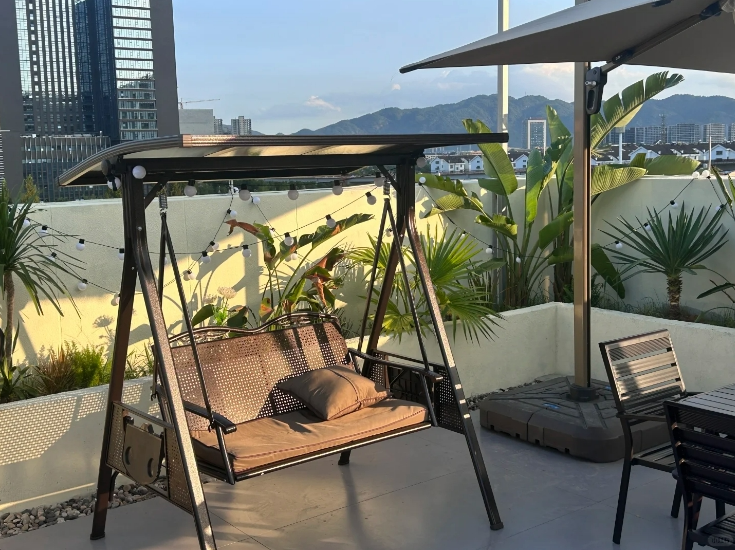
Thinking about upgrading your outdoor space with a canopy swing? Or unsure which material will perform best in your environment?
You’re not alone. Choosing the right canopy swing isn’t just about style—it directly affects durability, comfort, and long-term maintenance.
In this article, we’ll walk you through the main types of canopy swings, compare materials, and help you choose the best option based on your climate, usage, and budget.
If you’re ready to move beyond a standard patio setup and create a more relaxing outdoor atmosphere, keep reading.
Types of Canopy Swings
When selecting a canopy swing, most products fall into three main material categories: wood, metal, and wicker. Each offers a different balance of durability, appearance, and maintenance.
1. Wooden Canopy Swings
Wooden canopy swings are a timeless choice, ideal for those who prefer a natural and warm outdoor aesthetic.
High-quality hardwoods such as teak and cedar are naturally resistant to insects and decay, making them suitable for long-term outdoor use. Wood also stays relatively cool under sunlight, providing better comfort in hot weather.
However, not all wood is equal:
Teak — premium quality, highly durable, higher cost
Pine— more affordable, but lower density and prone to rot outdoors
Wood requires regular maintenance, including sealing, staining, or oiling. It is also heavier, making it less convenient to move.
Best for: Natural-style gardens, villas, and dry climates.
2. Metal Canopy Swings
Metal canopy swings—typically made from aluminum, steel, or wrought iron—are known for their strength and structural stability.
They require minimal maintenance and often feature powder-coated finishes to resist corrosion. Their sleek and modern design makes them a popular choice for contemporary outdoor spaces.
However:
Metal can become hot under direct sunlight
In humid or coastal environments, poor coating quality may lead to rust
Best for: Modern patios, commercial spaces (restaurants, hotels), and low-maintenance users.
3. Wicker Canopy Swings
Wicker swings offer a relaxed and elegant look, often paired with cushions for enhanced comfort.
Most outdoor wicker swings today use synthetic wicker (PE rattan), which is specifically designed for outdoor durability and weather resistance.
Compared to natural wicker, synthetic wicker:
Resists UV, moisture, and cracking
Requires less maintenance
Performs better in outdoor environments
However, wicker structures are generally less robust than metal frames, and long-term use may require partial replacement of the rattan.
Best for: Balconies, cozy patios, cafés, and lifestyle-oriented outdoor spaces.
Key Factors to Consider Before Buying
Choosing the right canopy swing requires more than just appearance. Here are the most important factors to evaluate:
1. Climate & Weather Conditions
Your local climate has a direct impact on material performance:
Dry climates: Wood performs well
Humid or coastal areas: Powder-coated metal or synthetic wicker is recommended
Cold regions :Avoid wood due to possible cracking from freeze-thaw cycles
Selecting the wrong material can significantly reduce the product lifespan.
2. Durability & Lifespan
Hardwood (teak, cedar): durable but requires maintenance
Metal (steel, aluminum) :highly durable and long-lasting
Synthetic wicker: moderate durability, suitable for light to medium use
If the swing will be used frequently, a metal frame is usually the most reliable option.
3. Aesthetic Appeal
Your canopy swing should match your outdoor design:
Wood :natural, rustic, warm
Metal: modern, clean, minimalist
Wicker:elegant, relaxed, decorative
For commercial spaces such as cafés or resorts, a consistent design style enhances overall appeal.
4. Maintenance Requirements
Wood :high maintenance (sealing, sanding, staining)
Metal:low maintenance (cleaning and occasional rust prevention)
Wicker:moderate maintenance (cleaning and inspection)
If you prefer a low-maintenance solution, metal or synthetic wicker is the better choice.
5. Comfort & Cushion Compatibility
Comfort is a key factor:
Wood: works well with thick cushions
Wicker:usually comes with soft cushions
Metal:may require additional padding
It is recommended to use breathable, weather-resistant fabrics such as Textilene for outdoor cushions.
6. Price Consideration
Solid wood swings: highest cost
Metal swings :balanced cost-performance
Wicker swings:generally more affordable
Your budget should be aligned with expected lifespan and usage frequency.
Why the Canopy (Top Cover) Matters
Many buyers overlook the importance of the canopy, but it directly affects comfort and usability.
Metal Canopy
Excellent waterproof performance
Retains heat, can feel hot in summer
Polyester Fabric Canopy
Provides shade and light rain protection
Breathable and more comfortable
Adjustable angle for better sun control
Replaceable fabric for easy maintenance
In most cases, polyester canopy is the more practical and widely used solution.
Recommended: Best Overall Choice
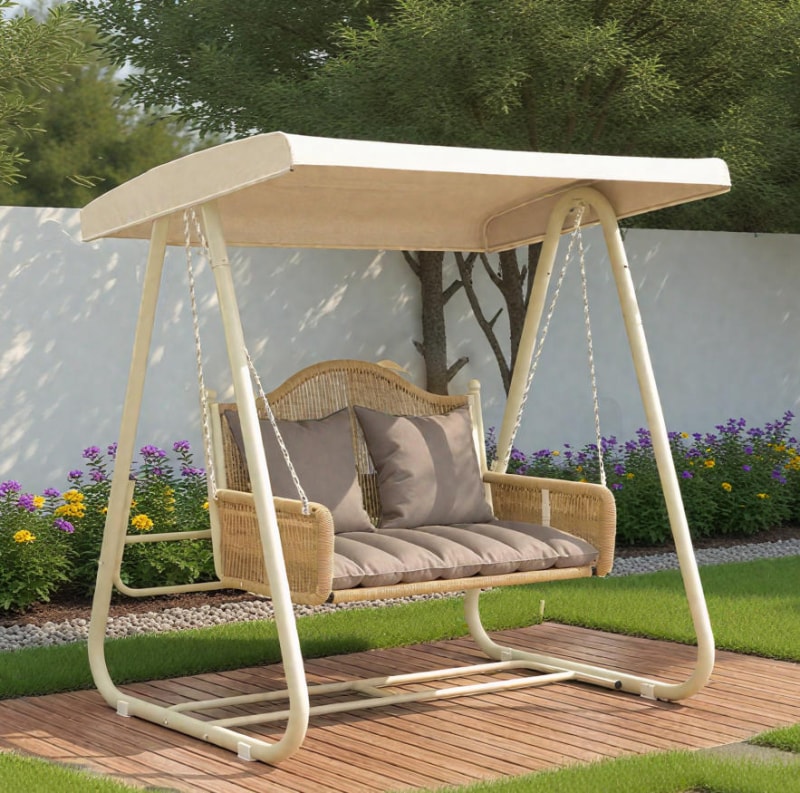
If you’re looking for a balance of durability, comfort, and cost-efficiency, the most recommended combination is:
Powder-coated steel frame + PE rattan body + polyester canopy
This setup provides:
Strong and stable structure
Weather resistance and long lifespan
Comfortable seating experience
Adjustable sun protection
Easy maintenance
About Joosun Canopy Swings
Joosun offers a wide range of canopy swings designed for different outdoor applications, including:
Residential gardens and patios
Outdoor dining areas
Hotels and resorts
Commercial leisure spaces
Our products feature:
Durable and stable construction
Customizable colors and materials
Low MOQ support
Suitable for both retail and project orders
For more styles, please explore our patio swing catalog.